<?xml version="1.0" encoding="utf-8"?>

<feed xmlns="http://www.w3.org/2005/Atom" xml:lang="en">
  <generator uri="https://jekyllrb.com/" version="3.10.0">Jekyll</generator>
  <link href="https://zachc.ai/feed.xml" rel="self" type="application/atom+xml" />
  <link href="https://zachc.ai/" rel="alternate" type="text/html" hreflang="en" />
  <updated>2026-11-28T11:53:56-08:00</updated>
  <id>https://zachc.ai/feed.xml</id>


    <title type="html">Zach’s Compass</title>


    <subtitle>Notes on building, learning, and figuring things out.</subtitle>


    <author>
        <name>ZachC</name>
      
      
    </author>


    <entry>
      

      <title type="html">Kevin Kelly on 1,000 True Fans</title>
      <link href="https://zachc.ai/blog/1000-true-fans/" rel="alternate" type="text/html" title="Kevin Kelly on 1,000 True Fans" />
      <published>2026-11-25T00:00:00-08:00</published>
      <updated>2026-11-25T00:00:00-08:00</updated>
      <id>https://zachc.ai/blog/1000-true-fans</id>


        <content type="html" xml:base="https://zachc.ai/blog/1000-true-fans/"><![CDATA[<div class="lang-en">

  <p>Kevin Kelly published <em>1,000 True Fans</em> in 2008 and later rewrote it for Tim Ferriss’s <em>Tools of Titans</em>. Both versions sit on the same page. The core claim holds up across both: to make a living as an independent creator, you don’t need millions of customers. Roughly a thousand people who buy whatever you make can be enough, provided they pay you directly and you’re aiming for a living, not a fortune.</p>

  <h2 id="the-math-behind-1000">The math behind 1,000</h2>

  <p>A true fan (what Kelly also calls a super fan) will buy anything you produce. They’ll drive 200 miles to hear you sing, buy the hardcover, paperback, and audiobook, order your next figurine sight unseen, pay for a “best-of” DVD of your free YouTube channel, or show up to your chef’s table once a month.</p>

  <p>The arithmetic rests on two conditions. First, you have to produce enough each year to earn an average of $100 in profit per true fan. That’s easier in some fields than others, though Kelly treats it as a good creative challenge because it’s almost always easier to sell more to people who already care than to chase strangers. Second, the relationship has to be direct. They pay you, and you keep the full amount, rather than taking a thin cut from a label, publisher, studio, or retailer. Keep $100 from 1,000 people and you make $100,000 a year, which is a living for most people.</p>

  <p>A thousand paying fans is concrete in a way a million never is. You might even remember a thousand names. Add one true fan a day and you get there in a few years.</p>

  <p>Kelly is explicit that 1,000 is an order of magnitude, three orders below a million, not a fixed quota. Earn $50 per fan and you need 2,000; earn $200 and 500 may do; live on $75,000 and the target drops again. Work as a duo and you double the count. Grow a team by 33% and the required fan base grows linearly, by 33%. In the 2008 essay he also noted that the real number varies by medium (maybe 500 for a painter and 5,000 for a videomaker), and you only find yours by trying. Another way to test the same bar: can you please 1,000 people worldwide enough to earn one day’s wages from each of them every year?</p>

  <p>Around that core sits a wider ring of casual buyers. For every true fan, Kelly estimates two or three regular fans (he called them “Lesser Fans” in 2008) who buy once or occasionally and might add another 50% in income. Even so, the work stays centered on true fans. They pay you directly, and their enthusiasm is what pulls casual buyers in. One way he framed the job in 2008 was converting a thousand Lesser Fans into a thousand True Fans.</p>

  <h2 id="why-small-niches-work-now">Why small niches work now</h2>

  <p>Direct patronage is actually the old default. What broke it was a century of modern retail, where middlemen sat between creators and customers. For generations, even major New York book publishers didn’t know the names of their most dedicated readers. More intermediaries meant you needed a far larger audience to survive. In the 2008 version, Kelly pointed out how fast indirect revenue inflates the math: a blogger living on ad clicks or an author splitting royalties with a publisher needs many times more true fans than someone selling direct, even if the target still sits well short of a blockbuster.</p>

  <p>The web handed creators global communication and payment tools: a musician in Bend, Oregon can sell and deliver a song to someone in Kathmandu as easily as a record label can. That lets you keep the full payment and stay in touch with the people paying you.</p>

  <p>Discovery changed too. On the web, the most obscure book or song sits one click away from a bestseller. Large aggregators like Amazon, eBay, and Netflix noticed that combined sales of slow-moving, obscure items could equal or beat the hits, an effect Kelly’s successor at <em>Wired</em>, Chris Anderson, named “The Long Tail.” Search engines and recommendation algorithms had a business reason to surface those obscure picks.</p>

  <p>Reading the 2008 essay next to the rewrite shows an interesting shift in tone. In 2008, Kelly treated the long tail as a mixed blessing: great for aggregators and consumers, rough on individual makers facing endless competition and falling prices. Back then, 1,000 True Fans was a way to climb <em>out</em> of the flatline of the long tail without chasing a hit.</p>

  <p>In the later rewrite, he leans harder on the upside. Across roughly 2 million small towns on Earth, you might be the only person in yours into a weird niche, yet online your fans are one click away. Even if an idea appeals to just one person in a million, a world of about 7 billion people (at the time of the rewrite) still gives you around 7,000 potential fans. Big corporations aren’t built to chase markets that small, leaving the long tail open to solo creators, and social media has made gathering and keeping those fans even easier. The hard part is getting found.</p>

  <h2 id="crowdfunding-and-mixing-routes">Crowdfunding and mixing routes</h2>

  <p>In 2008, before Kickstarter existed, Kelly looked to early patronage experiments: John Kelsey and Bruce Schneier’s “Street Performer Protocol” (don’t release the book until readers fill the pot), novelist Lawrence Watt-Evans releasing chapters for $100 a month, and musician Jill Sobule raising nearly $50,000 directly from fans toward a $75,000 album.</p>

  <p>By the rewrite, crowdfunding had turned those experiments into everyday infrastructure. Kelly counted roughly 2,000 platforms worldwide, covering all-or-nothing goals, partial funding, one-off projects, and ongoing patronage like Patreon (monthly magazines, video series, even an artist’s salary). Kickstarter, the largest, had raised $2.5 billion for over 100,000 projects, with the average successful campaign drawing just 241 backers, far fewer than a thousand. With 1,000 true fans, a campaign works almost by definition, though success still depends on what you ask them to fund.</p>

  <p>None of this has to be all-or-nothing. Kelly has published through big New York houses, self-published, and used Kickstarter, picking the format that fit each project. Having true fans helped every route he took.</p>

  <h2 id="the-catch">The catch</h2>

  <p>Cultivating a thousand true fans takes real effort. Done properly, it can turn into a second full-time job, or at best a demanding part-time one. Plenty of creators hate dealing with fans, and Kelly thinks some genuinely shouldn’t: they should just paint or make music and hire someone else to run the fan side. Adding a partner or manager raises the number of fans you need, or you can outsource it back to labels and publishers, though he warns those middlemen are usually worse at it than you would be.</p>

  <p>Even if you never hit a thousand, Kelly’s point is that you don’t have to bet your career on going viral or becoming a celebrity. Aiming for genuine appreciation from people who actually care is a saner target, and a far more reachable one.</p>

  <h2 id="a-short-note">A short note</h2>

  <p>I’m not sure the $100-a-year figure holds up for every kind of work. The second condition ages better: people pay you directly. Making things keeps getting cheaper, and AI pushes that even further. Trust with people who will actually pay you doesn’t get cheaper on its own.</p>

</div>]]></content>


      <author>
          <name>ZachC</name>
        
        
      </author>


          <category term="digest" />


        <category term="career" />
      
        <category term="money" />
      
        <category term="learning" />


        <summary type="html"><![CDATA[Notes from Kevin Kelly's 1,000 True Fans: making a living from roughly a thousand direct-paying fans, how the rewrite adds crowdfunding, and where the math gets hard.]]></summary>


    </entry>
  
    <entry>
      

      <title type="html">Sam Altman on Non-Consensus Bets</title>
      <link href="https://zachc.ai/blog/sam-altman-non-consensus-bets/" rel="alternate" type="text/html" title="Sam Altman on Non-Consensus Bets" />
      <published>2026-11-06T00:00:00-08:00</published>
      <updated>2026-11-06T00:00:00-08:00</updated>
      <id>https://zachc.ai/blog/sam-altman-non-consensus-bets</id>


        <content type="html" xml:base="https://zachc.ai/blog/sam-altman-non-consensus-bets/"><![CDATA[<div class="lang-en">

  <p>Raj Shamani’s <em>Figuring Out</em> podcast released a long interview with Sam Altman on November 3, and a Chinese write-up started circulating the next day. I watched the English original and jotted down the parts that stuck.</p>

  <h2 id="what-he-gave-up">What he gave up</h2>

  <p>Asked which version of himself has died, Altman points straight to the carefree one. When OpenAI started, he still had hobbies and could say yes to a last-minute Tuesday dinner. Now every hour is scheduled, and spontaneous time barely exists.</p>

  <p>What he misses most is a Saturday afternoon in a coffee shop with a laptop, scrolling aimlessly and catching up on email. Technically he could still go, except two security guards would sit at the next tables and anonymity is gone.</p>

  <p>He calls the trade fair: nobody was going to build superintelligence and keep a quiet life. He also thinks he should hear “you’re delusional” more often. People in his seat fail when everyone around them starts nodding. Old friends who’ve worked with him for over a decade help, and so does a culture that actually rewards blunt pushback.</p>

  <h2 id="betting-on-scale-before-people-bought-it">Betting on scale before people bought it</h2>

  <p>Starting OpenAI in 2015 was low-status work; AGI sounded like a hundred-year sci-fi dream, if ever. Altman’s recurring instinct was scale: companies, cities, careers, and networks like YC often pay super-linear returns once something that works small gets big. The moment neural nets worked at all and kept improving with size, he wanted to push scale hard, years before scaling laws looked clean.</p>

  <p>Smart critics had a neat objection: next-token prediction just remixes the training set, so it can’t create new knowledge. Feed a model a million math problems and it’ll learn those problems, not invent a proof nobody has written. Convincing on paper, except Altman thinks it missed the real trick: models were learning general reasoning that transfers into new domains.</p>

  <p>One call he walks through is the compute bet right after GPT-4 finished training around August 2022, months before public launch. Internally they could see new research paths opening up, including what became chain-of-thought and reasoning models, while the outside world hadn’t seen GPT-4 yet. They bet the company on buying massive compute instead of playing it safe with slower scaling. Had GPT-4 landed closer to a “GPT-3.8,” they wouldn’t have had the conviction to swing that hard.</p>

  <p>Still, overriding <em>everyone’s</em> advice is rare for him, and should feel expensive. Founders who take pride in ignoring smart people make him uneasy. Most of the time, listen. When you do go the other way, you need real conviction, not swagger.</p>

  <h2 id="chatgpts-awkward-launch">ChatGPT’s awkward launch</h2>

  <p>Shipping ChatGPT is his textbook example of a launch most of leadership felt was too early and too rough. He falls back on the old YC rule: if your first version doesn’t embarrass you a little, you waited too long. You need real feedback.</p>

  <p>The internal prototype’s retention was awful, roughly 5%. Normally that kills a launch on the spot. Talking to those 5% revealed a small pocket of people who genuinely loved it and used it constantly. Another YC rule: early on, a tiny crowd that loves what you built beats a huge crowd that mildly likes it.</p>

  <p>The bar is completely different now. Anything shipping to the entire ChatGPT user base, especially enterprise products near critical infrastructure, has to clear a much higher threshold. Even so, he still wants rough early bets in side lanes, fully expecting some to flop.</p>

  <p>On picking non-consensus work in general: in 2015 there were a handful of serious AGI labs and maybe ten thousand photo-sharing startups, and most people bet on photo sharing. His filter for a non-obvious idea is explaining it to an optimistic, disciplined, sharp friend outside the field and seeing if you update their view. Convince everybody and it’s probably too obvious; convince nobody and you should get more skeptical. History still has exceptions, so eventually you have to trust your own read.</p>

  <h2 id="two-bad-endings-and-whats-next">Two bad endings, and what’s next</h2>

  <p>He sketches two cartoonish ways AI goes horribly wrong: losing control to systems far more capable than humans and never getting it back, or letting one person, company, or country grab way too much power relative to everyone else. He wants multiple competing AI efforts taking different paths, which is part of why he wanted an effort outside Google in the first place.</p>

  <p>He admits skipping equity in OpenAI was a mistake. It felt principled at the time; mostly it just confused people.</p>

  <p>Asked what extraordinary thing he wants to build next, he jumps straight to science. Recent math breakthroughs convinced him the milestone is closer than he expected: machines that help unlock new physics, medicine, energy, and things we can’t picture yet. Deeper scientific understanding is how he thinks the world actually improves.</p>

  <p>On careers, he comes back to compounding. The old joke is twenty years of experience that’s just the same year repeated twenty times. Real compounding means stacking each phase on the last by staying on uncomfortable, non-obvious work, and most people drop off that curve early.</p>

  <p>Asked again about the personal cost, he answers with one word, twice: fair.</p>

  <h2 id="a-short-note">A short note</h2>

  <p>What stays with me is that 5% retention number and the handful of users who actually loved it. Early averages hide the only people who matter. I also keep his point about how rarely he wants to overrule a room of smart people. Non-consensus bets get romanticized; plenty of dissent is just wrong.</p>

</div>]]></content>


      <author>
          <name>ZachC</name>
        
        
      </author>


          <category term="digest" />


        <category term="ai" />
      
        <category term="career" />
      
        <category term="learning" />


        <summary type="html"><![CDATA[Notes from Sam Altman's interview with Raj Shamani: scaling before the world believed it, launching ChatGPT with ~5% retention, and how he tells a non-consensus bet from wishful thinking.]]></summary>


    </entry>
  
    <entry>
      

      <title type="html">The Stormlight Archive: three lines I want to keep</title>
      <link href="https://zachc.ai/blog/three-lines-i-want-to-keep/" rel="alternate" type="text/html" title="The Stormlight Archive: three lines I want to keep" />
      <published>2026-11-06T00:00:00-08:00</published>
      <updated>2026-11-06T00:00:00-08:00</updated>
      <id>https://zachc.ai/blog/three-lines-i-want-to-keep</id>


        <content type="html" xml:base="https://zachc.ai/blog/three-lines-i-want-to-keep/"><![CDATA[<div class="lang-en">

  <p>Three lines from a digest about <em>The Stormlight Archive</em> caught me off guard recently:</p>

  <blockquote>
    <p>Life before death.</p>

    <p>Strength before weakness.</p>

    <p>Journey before destination.</p>
  </blockquote>

  <p>What makes them stick is the word <em>before</em>. None of them denies that death, weakness, or destinations exist. They just tell you what comes first.</p>

  <p>In Brandon Sanderson’s series, this is the First Ideal shared by all ten orders of the Knights Radiant before their later oaths diverge. In the first book, <em>The Way of Kings</em>, Teft breaks it down for Kaladin, and his reading is a good way into all three.</p>

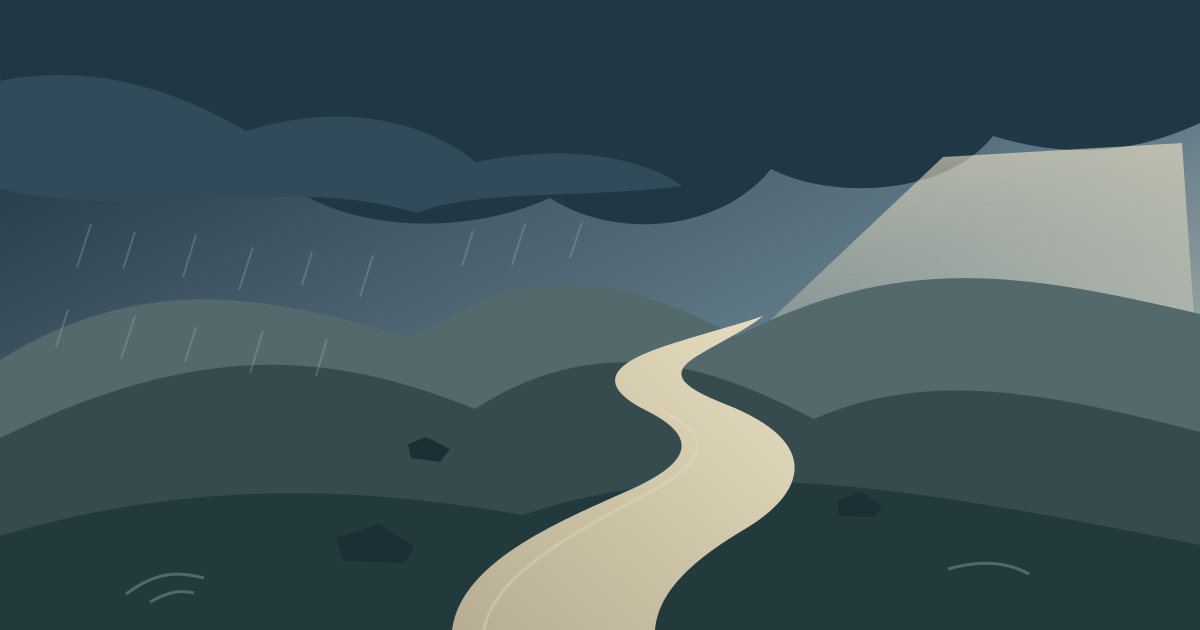
  <p><img src="/assets/images/first-ideal-cover.png" width="1200" height="630" alt="An original illustration of a winding path beneath rain clouds, continuing toward a patch of light." /></p>

  <h2 id="life-before-death">Life before death</h2>

  <p>Teft starts plainly: protect life, including your own. Don’t kill needlessly, and don’t throw your life away for nothing.</p>

  <p>That grounds the line fast. A life matters before it has anything impressive to show for it. Nobody turns into collateral damage just because a goal sounds big, and my own life isn’t an exception.</p>

  <p>I also read it against the fact that everything ends. Knowing a conversation is going to wrap up doesn’t make listening pointless. A friendship doesn’t need a lifetime guarantee to matter. Ending later doesn’t erase what happened before.</p>

  <p>Of course, on bad days, “love life” sounds fake. Sometimes just getting through the day is the whole job. What I want to keep from this line isn’t forced cheerfulness; it’s not waiting until everything is guaranteed to turn out fine before taking care of the life in front of me.</p>

  <h2 id="strength-before-weakness">Strength before weakness</h2>

  <p>Sanderson’s own take on this one is my favorite. Everyone has strong days and weak days. When you can’t hold yourself up, someone else steps in; later, you do the same for them.</p>

  <p>Neither role is permanent. Helping someone today doesn’t label them “the weak one,” and taking help when I need it doesn’t wipe out what I’m good at elsewhere.</p>

  <p>Teft adds a sharp guardrail: strength is for serving others. Having more capability gives you more ways to help, not a license to run someone else’s life. And it still respects limits. Having a little spare energy doesn’t mean taking on every request. When I’m already stretched, saying what I can manage and leaving the rest fits an oath that assumes weakness is part of being human.</p>

  <p>What I like most is that the care runs both ways. Step up when I can, let someone else catch me when I can’t, and drop the idea that self-respect requires handling everything solo.</p>

  <h2 id="journey-before-destination">Journey before destination</h2>

  <p>On the surface this sounds like “enjoy the process.” Teft pushes it somewhere harder: what are you willing to do to get there? In his book, losing cleanly beats winning dirty.</p>

  <p>Goals give you direction, and results tell you whether your plan worked. Neither one excuses how you got them. If hitting a target means lying to someone who trusts me, that lie stays on my ledger after the win. I’d rather count that cost before I move than spin a story for it afterward.</p>

  <p>It immediately reminded me of Rachel and Bruce in <em>Batman Begins</em>:</p>

  <blockquote>
    <p>“It’s not who I am underneath, but what I do that defines me.”</p>
  </blockquote>

  <p>The Batman line is about identity; the oath is about means and ends. They meet in the same place: the choices you make on the way. Those choices hit real people, and they show who I actually am far better than the person I plan to become someday.</p>

  <h2 id="seeing-clearly-and-still-caring">Seeing clearly, and still caring</h2>

  <p>Next to “life before death,” I keep putting a line from Romain Rolland’s preface to his biography of Michelangelo (my translation):</p>

  <blockquote>
    <p>There is only one heroism in the world: to see the world as it is, and to love it.</p>
  </blockquote>

  <p>In Chinese it usually travels as “在认清生活的真相后依然热爱生活.” The paragraph around it is full of human suffering and frailty; Rolland wasn’t interested in turning heroes into untouchable marble statues.</p>

  <p>That context makes the line usable. Loving life doesn’t mean pretending the painful or unfair parts aren’t there. You can see them straight on and still find something worth protecting, someone worth helping, or a choice worth making cleanly.</p>

  <p>I’m keeping these three lines nearby for the next time a real choice shows up.</p>

</div>]]></content>


      <author>
          <name>ZachC</name>
        
        
      </author>


          <category term="life" />


        <category term="philosophy" />
      
        <category term="life" />
      
        <category term="books" />


        <summary type="html"><![CDATA[The First Ideal from The Stormlight Archive made me think about caring for life, using strength, and the choices made on the way to a goal.]]></summary>


        <media:thumbnail xmlns:media="http://search.yahoo.com/mrss/" url="https://zachc.ai/assets/images/first-ideal-cover.png" />
        <media:content medium="image" url="https://zachc.ai/assets/images/first-ideal-cover.png" xmlns:media="http://search.yahoo.com/mrss/" />
      
    </entry>
  
    <entry>
      

      <title type="html">Conway’s law: who gets to finish the work?</title>
      <link href="https://zachc.ai/blog/conways-law-in-the-age-of-ai/" rel="alternate" type="text/html" title="Conway’s law: who gets to finish the work?" />
      <published>2026-11-01T00:00:00-07:00</published>
      <updated>2026-11-01T00:00:00-07:00</updated>
      <id>https://zachc.ai/blog/conways-law-in-the-age-of-ai</id>


        <content type="html" xml:base="https://zachc.ai/blog/conways-law-in-the-age-of-ai/"><![CDATA[<div class="lang-en">

  <p>Anthropic wrote up an agent refactor that cut latency and broke a workflow that used to pass. After folding a shipping subagent into the main loop, the main agent started answering order questions without checking delivery dates. Worse, the bug only showed up in one of two runs.</p>

  <p>Cutting the handoff had quietly cut a check. A shorter pipeline didn’t mean the job was still getting done.</p>

  <p>That’s the tension I’ve been chewing on lately: can a small team armed with AI finish work that used to bounce across four teams? It’s tempting to say yes. Conway’s law doesn’t tell you small teams beat big ones; it just says your system will mirror how your people actually talk and decide. Before handing a small team more surface area, you still have to look at what the old boundaries were protecting.</p>

  <p><img class="theme-img-light" src="/assets/images/conways-law-cover.svg" width="1200" height="630" alt="An illustrative change passes through UI, service, data, and release owners. A second arrangement puts those activities inside one bounded team with authorized agents, required checks, and a feedback loop." />
<img class="theme-img-dark" src="/assets/images/conways-law-cover-dark.svg" width="1200" height="630" alt="An illustrative change passes through UI, service, data, and release owners. A second arrangement puts those activities inside one bounded team with authorized agents, required checks, and a feedback loop." /></p>

  <h2 id="conways-law-shows-up-in-agent-architectures-too">Conway’s law shows up in agent architectures too</h2>

  <p>Melvin Conway’s 1968 observation is simple: organizations build systems that copy their own communication structures. Modules need shared assumptions to fit together. When the people behind them rarely talk or can’t make a call together, any design that requires tight coordination starts to rot. That reflects real working channels and decision power, not just the org chart.</p>

  <p>Anthropic sees the exact same thing in enterprise agents. Each product team spins up its own specialist agent, then a central team glues an orchestrator on top. Org boundaries turn into separate context windows, prompts, and handoffs, and any customer request that spans products has to hop across all of them.</p>

  <p>A Reddit post by u/AlexFromUplevel puts it bluntly: a service with no clear owner leaves an agent working on it with no clear owner either. It’s a practitioner’s observation, not a controlled study, yet the point lands. If nobody owns the whole workflow today, dropping agents into it won’t magically create ownership.</p>

  <h2 id="more-prs-isnt-the-same-as-more-shipped-work">More PRs isn’t the same as more shipped work</h2>

  <p>In a November 1 working paper, Fiona Chen and James Stratton looked at Jellyfish data from 655 companies. A year after adopting coding agents, teams opened about 36% more PRs and closed roughly 14% more Jira issues (with noisier statistical support on the issues), while time from PR open to merge jumped about 56%.</p>

  <p>Like any observational study, it leans on adoption timing rather than random assignment, and merge time includes queue wait, not just reviewer hours. Even with those caveats, the shape makes sense: if code arrives faster than a team can verify and integrate it, the hours saved typing just pile up in the review queue downstream.</p>

  <p>There are brighter reports too. FurtherAI’s engineering write-up on X talks about spending months hardening tests, CI, and risk-tiered merges before handing engineers broader planning and review ownership. That upfront investment interests me more than any one startup’s headline speedup. Cheap coding makes it easy to try ideas; getting them safely into production still takes its own machinery.</p>

  <h2 id="group-work-by-what-has-to-be-understood-together">Group work by what has to be understood together</h2>

  <p>AI lets one team touch more of the stack. How much of that stack the team can genuinely understand and own is a harder question.</p>

  <p>Anthropic’s rule of thumb for agents translates nicely to teams: fold specialists together when they constantly rely on each other’s output or share the same context; keep them apart when fresh context, parallel work, or conflicting tools make separation pay off.</p>

  <p>A UI and backend service that always change in lockstep probably belong under one roof. A shared payment core serving ten products doesn’t; shoving it into one product team just trades one bottleneck for a worse one.</p>

  <p>Microservices already pushed for autonomous teams around business capabilities, and Martin Fowler’s “inverse Conway maneuver” is about reshaping teams to get the architecture you want. Start with what a team should actually be accountable for, then figure out headcount and service boundaries. Any boundary that forces two teams to negotiate on every routine change is worth questioning, as long as you check what expertise or safety rail it was holding up before you tear it down.</p>

  <h2 id="autonomy-doesnt-mean-everyone-turns-into-a-generalist">Autonomy doesn’t mean everyone turns into a generalist</h2>

  <p>Block recently floated an org design that keeps deep specialists while giving a single DRI 90-day authority to pull from multiple teams on a cross-cutting problem. It’s a proposal, not proven history yet, but I like the direction: you keep deep craft while giving one person a concrete goal, a deadline, and real coordination power.</p>

  <p>Anthropic suggests a matching split for agents. Domain teams own their skills and tools; a small central team owns the system prompt and end-to-end quality. Multiple teams contribute without each spinning up a rival agent that hijacks the conversation.</p>

  <p>Neither setup gets you out of priority calls. When two products want the same specialist or platform at the same time, someone still has to choose. Giving everyone new titles or personal coding agents doesn’t settle who holds that tiebreaker. What actually helps is letting a team move freely inside clear boundaries and pull in specialist help without renegotiating every routine step from scratch.</p>

  <h2 id="know-what-a-handoff-does-before-deleting-it">Know what a handoff does before deleting it</h2>

  <p>That missing delivery date at the start is a classic example of hidden work inside a handoff. Process diagrams rarely show the informal checks people carry in their heads.</p>

  <p>Some approvals just enforce a predictable rule that belongs in a test or an automated guardrail. Others are real judgment calls: is this migration safe, should we build this at all, does it break a promise we made to customers? Separate those two before deleting the step. Automate the repeatable checks; keep a named human on the hook for judgment.</p>

  <p>Tests, permissions, and clean rollbacks aren’t bureaucracy; they’re what let a team ship low-risk changes without asking permission up the chain. Speed up code generation without matching verification, and you’re mostly generating cleanup work for whoever holds the pager. And measure the whole loop: green unit evals can hide a broken customer workflow, just like a record PR count can hide a jammed review queue.</p>

  <h2 id="test-it-on-one-workflow-first">Test it on one workflow first</h2>

  <p>I haven’t worked at a startup, so my picture of their speed still has some guesswork in it. A greenfield team and a team running a ten-year-old system with shared databases and unwritten rules aren’t playing the same game. Generating replacement code is easy; untangling those rules isn’t.</p>

  <p>If I were trying this, I’d pick one bounded workflow with clear decision rights and risk limits, then measure end-to-end delivery at comparable quality: waiting, rework, and post-release bugs included. I’d also check whether the speedup secretly leaned on another team’s extra effort or months of verification tooling built ahead of time.</p>

  <p>Incentives matter just as much. Reward PR volume and visible AI usage, and you’ll get plenty of both. I’d rather reward cutting a dependency, shrinking maintenance, or preventing an incident. Conway himself argued for rewarding managers who keep organizations lean and adaptable.</p>

  <p>A good pilot earns wider ownership. A messy one might tell you to fix the tests, tighten requirements, or keep a specialist boundary right where it is. Headcount alone won’t tell you which.</p>

  <p>I’d start by picking one handoff and finding out what it’s actually doing.</p>

</div>]]></content>


      <author>
          <name>ZachC</name>
        
        
      </author>


          <category term="tech" />


        <category term="ai" />
      
        <category term="engineering" />
      
        <category term="systems" />
      
        <category term="career" />


        <summary type="html"><![CDATA[AI can change the cost of implementation without automatically removing coordination or responsibility. Conway's law shows up in agent architectures too, leaving a practical question about which boundaries to keep.]]></summary>


        <media:thumbnail xmlns:media="http://search.yahoo.com/mrss/" url="https://zachc.ai/assets/images/conways-law-cover.png" />
        <media:content medium="image" url="https://zachc.ai/assets/images/conways-law-cover.png" xmlns:media="http://search.yahoo.com/mrss/" />
      
    </entry>
  
    <entry>
      

      <title type="html">Helping others and yourself</title>
      <link href="https://zachc.ai/blog/helping-others-and-yourself/" rel="alternate" type="text/html" title="Helping others and yourself" />
      <published>2026-10-29T00:00:00-07:00</published>
      <updated>2026-10-29T00:00:00-07:00</updated>
      <id>https://zachc.ai/blog/helping-others-and-yourself</id>


        <content type="html" xml:base="https://zachc.ai/blog/helping-others-and-yourself/"><![CDATA[<div class="lang-en">

  <p>I don’t spend much time thinking about what I wear.</p>

  <p>Mirrors are still useful, though, just for a different check: whether what I say and do lines up with what I claim to care about.</p>

  <p>The <em>Old Book of Tang</em> records Emperor Taizong saying:</p>

  <blockquote>
    <p>夫以铜为镜，可以正衣冠；以古为镜，可以知兴替；以人为镜，可以明得失。</p>
  </blockquote>

  <p>Roughly: bronze straightens your clothes, history shows how empires rise and fall, and other people show you where you’re right or wrong.</p>

  <p>That last line is the one I keep coming back to. Stepping into someone else’s problem forces me to look at my own thinking up close. Helping people is one of the best mirrors I have.</p>

  <h2 id="helping-others-first">Helping others first</h2>

  <p>Sure, if I help someone today, they might return the favor later. Win-win is great. I just don’t like counting on it. If I’m hoping for something back, I’d rather say so up front.</p>

  <p>The bigger payoff has nothing to do with favors. My own life is a tiny sample. If I actually want to be useful to someone, I have to understand what they’re dealing with first, and admit when my playbook doesn’t fit. If I only listen long enough to deliver the answer I walked in with, I’m not learning anything, and I’m probably not helping much either.</p>

  <p>Giving advice is also a sneaky integrity check. Would I take this advice myself if I were in their shoes? If the honest answer is no, I’ve probably made their problem sound simpler than it is and conveniently left out the cost.</p>

  <p>Even when I would take it, it’s still my answer, not theirs. We might care about different things and be able to stomach different risks. At the end of the day, they’re the one who has to live with the choice.</p>

  <h2 id="looking-after-myself-first">Looking after myself first</h2>

  <p>Helping takes real energy. Before I say yes, I need to be honest about whether I actually have the time and headroom to do it properly.</p>

  <p>That doesn’t mean my own life has to be spotless first. Plenty of my own stuff is messy, and I can still lend a hand on something I know how to handle.</p>

  <p>On the flip side, having spare energy doesn’t mean saying yes to everything. If I want the freedom to turn down requests that don’t fit, I have to give other people the same room to ignore my advice.</p>

  <p>“Burn yourself to light up others” doesn’t sit right with me. I’m happy to give up some time or convenience. If something asks for a real sacrifice, I want to know what it’s actually buying, and whether I’m willing to pay that price without quietly resenting it later.</p>

  <p>Sacrifice isn’t automatically noble just because it hurts. And if someone chooses to give generously without being able to articulate a neat rationale, I’m not going to look down on that either.</p>

  <h2 id="no-need-to-pick-an-order">No need to pick an order</h2>

  <p>In the end, “help others first” and “help yourself first” aren’t fighting each other. The first is about how helping someone else sharpens me; the second is about checking my own tank before I write checks I can’t cash.</p>

  <p>You don’t have to finish fixing your own life before you help anyone, and helping someone doesn’t mean letting your own life fall apart. Both happen side by side. When I’ve got the energy and something real to offer, I jump in. When I’m already stretched thin, I say what I can do and pass on the rest.</p>

</div>]]></content>


      <author>
          <name>ZachC</name>
        
        
      </author>


          <category term="life" />


        <category term="philosophy" />
      
        <category term="life" />
      
        <category term="mind" />


        <summary type="html"><![CDATA[Mirrors aren't just for checking your clothes. Helping someone else forces me to test my own judgment, as long as I'm honest about what I can actually give.]]></summary>


    </entry>
  
    <entry>
      

      <title type="html">When Nobody’s Watching</title>
      <link href="https://zachc.ai/blog/when-nobodys-watching/" rel="alternate" type="text/html" title="When Nobody’s Watching" />
      <published>2026-10-29T00:00:00-07:00</published>
      <updated>2026-10-29T00:00:00-07:00</updated>
      <id>https://zachc.ai/blog/when-nobodys-watching</id>


        <content type="html" xml:base="https://zachc.ai/blog/when-nobodys-watching/"><![CDATA[<div class="lang-en">

  <p>In high school, our principal gave a short talk every Monday after the flag-raising. One week he talked about <em>shendu</em> (慎独).</p>

  <p>I didn’t really get it. And I didn’t do it either. When there were no adults home, I’d turn on the TV and leave the homework for later.</p>

  <p>The word stuck, though.</p>

  <h2 id="what-it-actually-says">What it actually says</h2>

  <p>It comes from the <em>Doctrine of the Mean</em>: “莫见乎隐，莫显乎微，故君子慎其独也。” Roughly: nothing shows more than what you hide, nothing gives you away like the small stuff, so a decent person is most careful when alone.</p>

  <h2 id="why-i-didnt-do-it">Why I didn’t do it</h2>

  <p>Looking back, other people set the standard then. Teachers checked the homework. There were proctors during exams, and someone else did the grading.</p>

  <p>So when somebody was watching, I did the work, and when nobody was, the TV went on. I think what I really cared about was whether I’d get caught.</p>

  <h2 id="now">Now</h2>

  <p>These days I answer to myself. I set my own bar and work hard to meet it, without anyone telling me to. That bar is already higher than anything anyone else asks of me, so that’s the one I focus on.</p>

  <p>Some nights I’ll keep working until 3 or 4 a.m. because I want to finish something I set out to do. There’s nobody watching then either, but it matters a lot less now that I’m setting the standard.</p>

  <p>It took me years to get what my principal was talking about that Monday. Some of it, anyway.</p>

  <p>That’s it for now.</p>

</div>]]></content>


      <author>
          <name>ZachC</name>
        
        
      </author>


          <category term="life" />


        <category term="philosophy" />
      
        <category term="life" />
      
        <category term="mind" />


        <summary type="html"><![CDATA[My high school principal once talked about shendu, being careful when you're alone. Back then, nobody watching meant TV instead of homework. Now the bar is my own, and nobody watching can mean I'm still working at 3 a.m.]]></summary>


    </entry>
  
    <entry>
      

      <title type="html">What do I miss?</title>
      <link href="https://zachc.ai/blog/before-i-knew-too-much/" rel="alternate" type="text/html" title="What do I miss?" />
      <published>2026-10-25T00:00:00-07:00</published>
      <updated>2026-10-25T00:00:00-07:00</updated>
      <id>https://zachc.ai/blog/before-i-knew-too-much</id>


        <content type="html" xml:base="https://zachc.ai/blog/before-i-knew-too-much/"><![CDATA[<div class="lang-en">

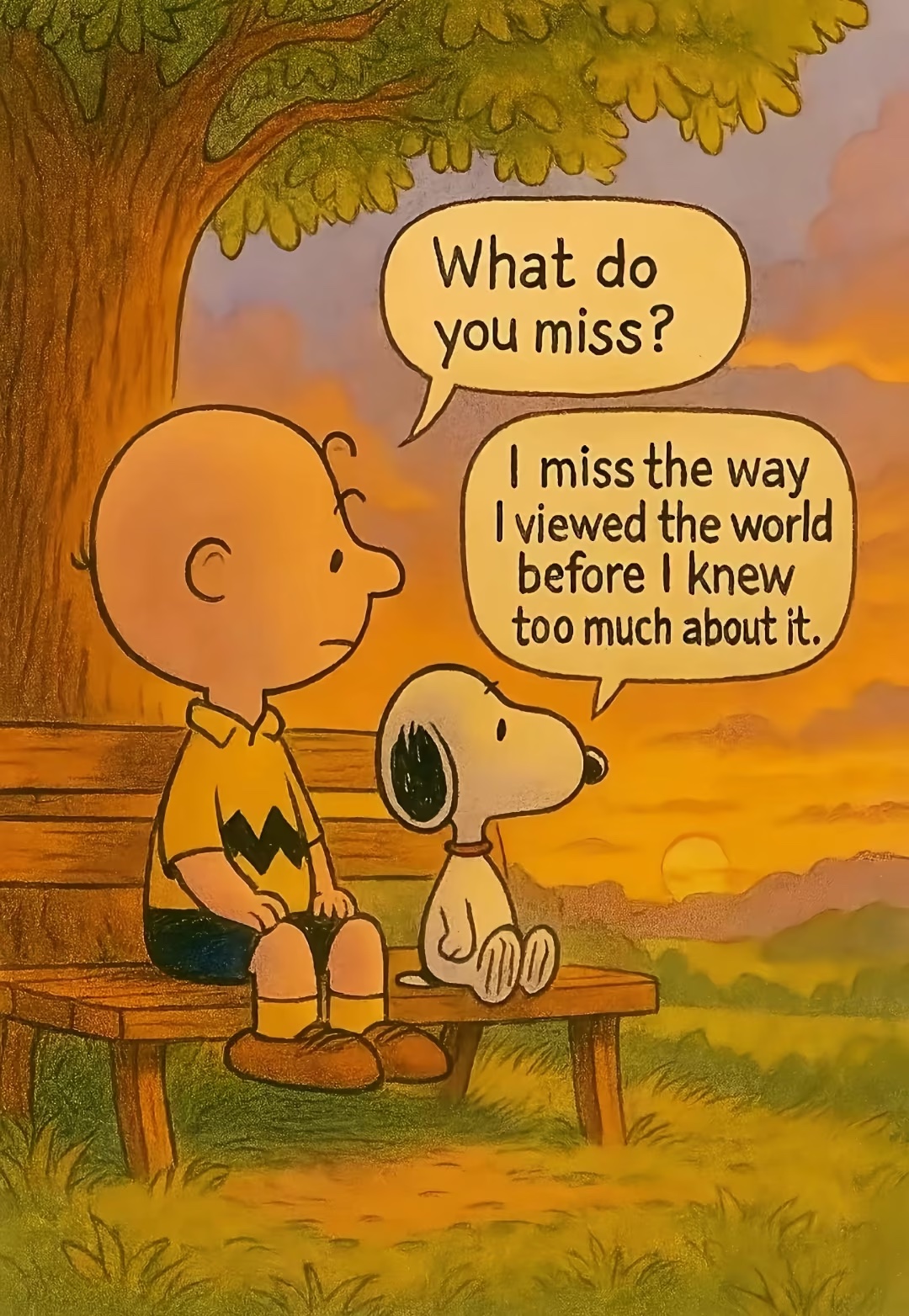
  <p>I came across this picture.</p>

  <figure>
  <img src="/assets/images/what-do-you-miss.jpg" width="480" height="695" alt="Charlie Brown and Snoopy sit on a bench under a tree at sunset. Charlie Brown asks, &quot;What do you miss?&quot; Snoopy answers, &quot;I miss the way I viewed the world before I knew too much about it.&quot;" />
  <figcaption>It's been going around online. I don't know who made it.</figcaption>
</figure>

  <p>My first reaction was to nod along. Then I thought about it a bit longer and realized I’m close to the opposite. The happiest years I’ve had were the years I was learning the most, the fastest.</p>

  <h2 id="the-dial-up-years">The dial-up years</h2>

  <p>When I was a kid, we had a computer at home with a Celeron processor and a big, boxy CRT monitor, and we got online by dial-up.</p>

  <p>The internet was just taking off, and it felt like a door had swung open onto a whole new world. Everything online was free. Pirated stuff was everywhere. Pretty much any game, movie or TV show I wanted, I could download.</p>

  <p>For me personally, it was also when my picture of the world exploded. I was finding out something new almost every day, and the world kept getting bigger. And all of that landed right in the middle of my teenage years.</p>

  <p>Looking back, those were the happiest years of my life so far.</p>

  <p>After that, things got less fun.</p>

  <h2 id="what-happened-after">What happened after</h2>

  <p>I honestly can’t say exactly why.</p>

  <p>Maybe the novelty wore off. The internet went from “everything’s here” to “too much of everything,” from a door to something closer to running water.</p>

  <p>Or maybe it had little to do with the internet, and I just stopped being a teenager. School, then work, more to worry about every year, and curiosity got squeezed into a corner by getting things done. In <a href="/blog/rediscovering-curiosity/">Rediscovering Curiosity</a> I wrote that I went about a decade without it.</p>

  <p>So, back to Snoopy. What I miss isn’t the time before I knew too much. It’s the years when I was finding out, when the world kept opening and nothing had settled into “that’s just how it is” yet.</p>

  <h2 id="then-ai-happened">Then AI happened</h2>

  <p>These past couple of years, AI has given me that feeling back.</p>

  <p>It feels like my mind got let out again. Things that used to sit behind a pile of prerequisites, I can now just ask about. If I get an idea, I can build something that evening and see. There’s suddenly so much more I can learn, and the joy of it feels a lot like the first time I realized the internet had everything.</p>

  <p>But I can’t help wondering. Last time, after the explosion, I got less happy. Will this one go the same way?</p>

  <h2 id="a-pessimistic-optimist">A pessimistic optimist</h2>

  <p>I’m a pessimistic optimist.</p>

  <p>The pessimist in me says: probably. Novelty always wears off. AI will become running water too, and there’ll be new things to worry about.</p>

  <p>The optimist in me says that’s fine.</p>

  <p>Those years really were happy, and the fact that it faded doesn’t undo that.</p>

  <p><a href="/blog/young-with-a-little-hindsight/">In September</a> I quoted a line that stuck with me: “You can’t have youth and an understanding of it at the same time.” As a teenager I had no idea I was in the good part. This time I know while it’s happening, so I can pay attention.</p>

  <p>And last time, part of the fading was on me. I let the curiosity go. That part I can do something about.</p>

  <p>I should also admit my filter has gotten thicker with age. How slow dial-up was, how easily it dropped: I hardly think about any of that now. Memory touches those years up on its own. Part of why Snoopy’s line hits so hard is probably that same filter.</p>

  <h2 id="looking-back-to-move-forward">Looking back to move forward</h2>

  <p>That said, I’m not someone who sits around missing the past.</p>

  <p>When I look back at those years, I’m mostly looking for clues. What actually made me that happy? The answer seems pretty clear. The world was opening up, and I was trying to see as much of it as I could. The Celeron and the CRT had little to do with it.</p>

  <p>Which makes this round easier. I don’t need to wait until these become “those years” to appreciate them. While it’s still happening, I want to learn more, try more, and build more. And when the novelty does wear off, I’d like to keep the curiosity anyway.</p>

  <p>If Charlie Brown ever asks me what I miss, I hope I can say the years when AI first showed up, and that I didn’t waste them.</p>

  <p>Anyway. Back to tinkering.</p>

</div>]]></content>


      <author>
          <name>ZachC</name>
        
        
      </author>


          <category term="life" />


        <category term="ai" />
      
        <category term="learning" />
      
        <category term="life" />


        <summary type="html"><![CDATA[A Snoopy picture asks what you miss. For me it's the dial-up years, when the internet opened up a whole new world. AI feels a lot like that again, and this time I want to make the most of it while it's happening.]]></summary>


        <media:thumbnail xmlns:media="http://search.yahoo.com/mrss/" url="https://zachc.ai/assets/images/what-do-you-miss.jpg" />
        <media:content medium="image" url="https://zachc.ai/assets/images/what-do-you-miss.jpg" xmlns:media="http://search.yahoo.com/mrss/" />
      
    </entry>
  
    <entry>
      

      <title type="html">Meditations: Still Practicing</title>
      <link href="https://zachc.ai/blog/meditations-and-stoicism/" rel="alternate" type="text/html" title="Meditations: Still Practicing" />
      <published>2026-10-24T00:00:00-07:00</published>
      <updated>2026-10-24T00:00:00-07:00</updated>
      <id>https://zachc.ai/blog/meditations-and-stoicism</id>


        <content type="html" xml:base="https://zachc.ai/blog/meditations-and-stoicism/"><![CDATA[<div class="lang-en">

  <p><img src="/assets/images/meditations-cover.png" width="1200" height="630" alt="An open notebook and a pen rest on a stone table beneath an arch." /></p>

  <p>Book Five of <em>Meditations</em> opens with a Roman emperor arguing with his blankets.</p>

  <blockquote>
    <p>In the morning when thou risest unwillingly, let this thought be present—I am rising to the work of a human being.</p>
  </blockquote>

  <p>That’s George Long’s old translation. One line apparently wasn’t enough, so Marcus keeps going. Was he born to lie under the covers and stay warm? Look at the ants and the bees, all busy. Three books later he’s back on the same subject.</p>

  <p>I find this weirdly comforting. The man running the Roman Empire kept a private notebook, and part of it is him talking himself out of bed.</p>

  <p>This is a big part of why I like Stoicism. <em>Meditations</em> reads like someone reminding himself of things he keeps forgetting. Most of what I know works the same way. I understand it fine, and then forget it right when I need it.</p>

  <h2 id="whats-actually-mine">What’s actually mine</h2>

  <p>Epictetus, who had a big influence on Marcus, starts his <em>Enchiridion</em> bluntly: “Some things are in our control and others not.” Your opinions, and what you want or avoid, are yours. Your body, your property and your reputation aren’t.</p>

  <p>Sounds clean. But most of what I actually care about sits in the middle. I can push on it. I can’t guarantee it.</p>

  <p>Say I send someone a proposal. I can make the case clearly and poke holes in it myself first. Whether they say yes depends on their situation and a bunch of things I’ll never see. Refreshing my inbox won’t change any of that.</p>

  <p>I still want it to work, obviously. If it doesn’t, I want to know why. And if I did a sloppy job, “it was out of my control” is a pretty convenient line to hide behind.</p>

  <p>But once I’ve really done my part, more worrying doesn’t buy me anything. Wanting it harder doesn’t give me another move.</p>

  <p>That’s the most useful thing I’ve taken from Stoicism. I can care a lot about something without treating every result as a verdict on me.</p>

  <h2 id="what-were-you-actually-told">What were you actually told?</h2>

  <p>There’s a passage in Book Eight I love. Roughly: someone tells you a person has been talking about you behind your back. That’s what you were told. Nobody told you that you’ve been hurt. You added that part yourself.</p>

  <p>Back to the proposal. “I haven’t heard back” is what I know. “They think it’s a bad idea” is a guess. “I always mess this up” is a whole story I made up, starring me.</p>

  <p>The trouble is that the guesses show up as fast as the facts and feel just as real. What I’m trying to get better at is simple: notice when I’ve added a layer, stop, and go back to what I can actually do. Follow up? Fix the proposal? Neither one needs me to decide what kind of person I am first.</p>

  <p>A couple of sections earlier he goes further. It isn’t the thing that’s bothering you, he says, it’s your judgment about it, and you can wipe that judgment out right now.</p>

  <p>I’ll use that on myself. I’m a lot more careful using it on anyone else. Some things hurt because they’re genuinely bad: being sick, losing someone, getting treated unfairly. Looking at them differently doesn’t make them smaller, and telling someone in pain to “reframe it” is about the least helpful thing you can say.</p>

  <p>Even with small stuff, understanding why I’m annoyed doesn’t always make the annoyance leave on schedule. I’m not adding “still annoyed” to my list of failures.</p>

  <h2 id="calm-is-the-small-part">Calm is the small part</h2>

  <p>It’s easy to read Stoicism as a set of tricks for staying calm. That misses most of it.</p>

  <p>What it really cares about is being a good person. Wisdom, courage, justice and moderation come first. Calm is more of a side effect.</p>

  <p>That gives me a better test than “am I calm?” If I’m perfectly composed while pushing the cost of my choices onto someone else, the composure isn’t worth much.</p>

  <p>Marcus has an image I really like: a person who helps others the way a vine grows grapes. It does its thing, moves on to the next season, and doesn’t keep score. I’d like to be more like that. I’d just add a footnote of my own. Being generous doesn’t mean going along with something unfair.</p>

  <h2 id="accept-it-then-what">Accept it, then what?</h2>

  <p>“Accept what you can’t control” can turn into a really convenient excuse.</p>

  <p>Plenty of things I can’t change alone, a few people together might. Sometimes the right move is to speak up, ask for help, or leave a situation that keeps hurting people. None of that comes with a guarantee. If I use the lack of a guarantee as permission to do nothing, I’ve turned a philosophy about responsibility into a way to dodge it.</p>

  <p>Marcus seems to agree. A couple of sentences after the line about wiping out a judgment, he asks himself: if what’s bothering you is something you think you ought to be doing, “why dost thou not rather act than complain?”</p>

  <p>In <a href="/blog/order-and-freedom/">my post about order and freedom</a>, I wrote about staying in ordinary life while keeping enough distance to choose what’s worth my effort. Stoicism gives me a way to keep going with that. Take things seriously, do my part, and let go of the idea that everything depends on me.</p>

  <h2 id="just-come-back">Just come back</h2>

  <p>The passage I’d put next to the blankets is also in Book Five. When he doesn’t live up to his principles, Marcus tells himself not to get disgusted or discouraged. Just come back.</p>

  <p>Then there’s a detail I love. Don’t come back to philosophy like you’re returning to a strict teacher, he says. Come back the way someone with sore eyes goes back to whatever soothes them. You return because it helps.</p>

  <p>And in Book Eight, more bluntly: “thou choosest rather to become good to-morrow than to be good to-day.”</p>

  <p>That one got me a little. Agreeing with Stoicism takes about five minutes. Remembering it in the middle of an annoying conversation is the actual work, and most of the time I’m not there yet. I know the difference between a fact and a guess, right up until a guess feels true.</p>

  <p>So, keep practicing. Starting today, ideally. Next time I’ve typed out a sharp reply, I’ll read it once more before I hit send and see if I still mean it.</p>

</div>]]></content>


      <author>
          <name>ZachC</name>
        
        
      </author>


          <category term="life" />


        <category term="philosophy" />
      
        <category term="books" />
      
        <category term="mind" />


        <summary type="html"><![CDATA[Marcus Aurelius had to talk himself out of bed, more than once. I like Stoicism because it treats wisdom as something you practice, forget, and come back to.]]></summary>


        <media:thumbnail xmlns:media="http://search.yahoo.com/mrss/" url="https://zachc.ai/assets/images/meditations-cover.png" />
        <media:content medium="image" url="https://zachc.ai/assets/images/meditations-cover.png" xmlns:media="http://search.yahoo.com/mrss/" />
      
    </entry>
  
    <entry>
      

      <title type="html">The hour I don’t want to give up</title>
      <link href="https://zachc.ai/blog/the-hour-i-dont-want-to-give-up/" rel="alternate" type="text/html" title="The hour I don’t want to give up" />
      <published>2026-10-24T00:00:00-07:00</published>
      <updated>2026-10-24T00:00:00-07:00</updated>
      <id>https://zachc.ai/blog/the-hour-i-dont-want-to-give-up</id>


        <content type="html" xml:base="https://zachc.ai/blog/the-hour-i-dont-want-to-give-up/"><![CDATA[<div class="lang-en">

  <p>A lot of my best work seems to happen in the hour or two after I’m supposed to have stopped.</p>

  <p>The feeling got strong enough that I went and counted. Over the past year, by commits, the busiest hour of my workday was 5 to 6 p.m., with about one in every eight weekday commits. Roughly another sixth came after six.</p>

  <p>That number doesn’t prove much. A commit marks when something got finished, not how long I spent thinking about it, and some of those commits were written by an agent anyway. But it lined up with the feeling, so I stopped writing the feeling off.</p>

  <p>So, one more hour? I usually say yes.</p>

  <h2 id="whats-good-about-the-evening">What’s good about the evening</h2>

  <p>The obvious answer is that it’s quiet. Fewer messages, no meetings, nobody waiting on me.</p>

  <p>But I think the bigger thing is what the quiet lets me do, which is work on something alone with AI.</p>

  <p>During the day, most of what I do goes through other people. At a big company, even a small change means explaining the background, figuring out who needs to sign off, waiting for replies, and explaining it again to whoever missed the first round. Nobody’s doing anything wrong. That’s just what it costs to get a lot of people on the same page. It’s still slow, and a big chunk of my energy goes into that part.</p>

  <p>In the evening it’s just me, the problem, and an AI agent. I say what I want, see something in a few minutes, fix what’s off, and try again. Bad ideas die fast, before I get attached to them. Good ones I can build on right away, no meeting required.</p>

  <p>For the kind of work I do, that’s just faster. And the feedback is really strong. Every small thing that works makes me want to start the next one, and an hour like that sometimes gets further than a whole day of waiting.</p>

  <p>Talking to people still matters. Whether something should be built at all is a conversation, and an agent can’t decide that for me. But with people, I wait until everyone’s free. With an agent, I can try an idea the moment I have it.</p>

  <h2 id="i-might-be-giving-the-evening-too-much-credit">I might be giving the evening too much credit</h2>

  <p>I’m a little suspicious of myself here, though.</p>

  <p>When a problem finally clicks at seven, it’s easy to forget the afternoon I spent ruling out the wrong approach. That felt like going in circles, and the evening felt like progress. But the evening probably moved fast because the afternoon had already done the groundwork. Everything was loaded in my head and the next step was obvious.</p>

  <p>Also, that extra hour is often the only stretch of my day nobody interrupts. I’m comparing it to a daytime that’s been chopped into little pieces. Of course it looks great.</p>

  <p>So maybe there’s nothing special about the evening. Maybe the right conditions just tend to show up after work.</p>

  <h2 id="wanting-to-keep-going-or-not-being-able-to-stop">Wanting to keep going, or not being able to stop</h2>

  <p>All that said, I really do like that hour. Sticking with a problem because I want to see how it turns out is one of my favorite feelings, and I don’t feel like making excuses for it.</p>

  <p>What gives me pause is that two very different thoughts can keep me at the desk. One is “I want to see what happens next.” The other is “today doesn’t count until I have something to show for it.” From the outside they look the same. They feel very different to live through, and a lot of the time I can only tell which one it was afterward.</p>

  <p>Calling it “high ROI” doesn’t help me tell them apart. The return is easy to see: something that was broken now works. What else that hour could have been is impossible to count, because it never happened.</p>

  <p>I like the idea that doing a little extra every day adds up. I just want it to stay something I choose, and never turn into a rule that every free hour has to be filled.</p>

  <h2 id="could-i-move-it-to-daytime">Could I move it to daytime?</h2>

  <p>If the evening works because the loop is short and nobody interrupts me, the time on the clock shouldn’t matter much. I should be able to move some of it earlier.</p>

  <p>Something like a block during the day that’s just me, the problem, and the agent. I’d need to know where to start before I sit down, and ask people my questions the day before, so I’m not waiting on anyone once it starts.</p>

  <p>The smallest thing I can do tonight: before I stop, leave myself a note for tomorrow. Where I am, what I was about to try. Then I don’t have to finish everything tonight just to avoid losing my train of thought.</p>

  <p>Some nights I’ll still want to keep going, and that’s fine. I mostly want to find out whether, with time like this during the day, I’d still find the evening so hard to let go of.</p>

  <p>Monday morning, then. Notifications off, last night’s note waiting for me.</p>

</div>]]></content>


      <author>
          <name>ZachC</name>
        
        
      </author>


          <category term="life" />


        <category term="ai" />
      
        <category term="attention" />
      
        <category term="mind" />
      
        <category term="productivity" />


        <summary type="html"><![CDATA[Some of my best work happens after I'm supposed to have stopped. I think it's mostly the short loop of working alone with AI, and I want to see if I can get that during the day too.]]></summary>


    </entry>
  
    <entry>
      

      <title type="html">The hawk-dove game: who pays for the fight?</title>
      <link href="https://zachc.ai/blog/hawk-dove-game/" rel="alternate" type="text/html" title="The hawk-dove game: who pays for the fight?" />
      <published>2026-10-21T00:00:00-07:00</published>
      <updated>2026-10-21T00:00:00-07:00</updated>
      <id>https://zachc.ai/blog/hawk-dove-game</id>


        <content type="html" xml:base="https://zachc.ai/blog/hawk-dove-game/"><![CDATA[<div class="lang-en">

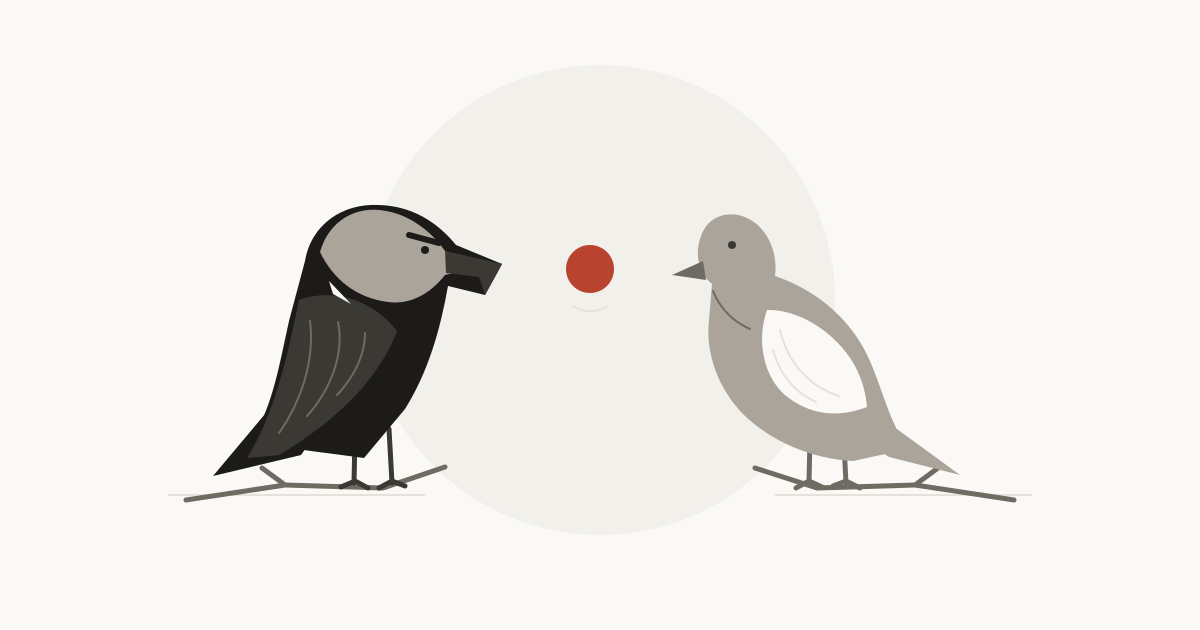
  <p><img class="theme-img-light" src="/assets/images/hawk-dove-cover.svg" width="1200" height="630" alt="An angular hawk and a rounded dove face a small red resource between them." />
<img class="theme-img-dark" src="/assets/images/hawk-dove-cover-dark.svg" width="1200" height="630" alt="An angular hawk and a rounded dove face a small red resource between them." /></p>

  <p>Picture a Friday afternoon. Someone drops a new feature request and wants it by end of day. Getting it done means dropping something you already promised, or giving up your evening.</p>

  <p>They get the feature. You lose the night.</p>

  <p>What draws me to the hawk-dove game is how cleanly a setup can reward pushing hard. When someone else supplies the extra hours, insisting on “today” gets pretty cheap.</p>

  <h2 id="a-resource-two-moves">A resource, two moves</h2>

  <p>In the textbook version, two players contest a resource worth <code class="language-plaintext highlighter-rouge">V</code> with two moves:</p>

  <ul>
    <li>Hawk: escalate and keep pushing, willing to take a costly fight.</li>
    <li>Dove: avoid an expensive clash and back down if the other player escalates.</li>
  </ul>

  <p>These are moves, not personality types. Saying no politely and firmly doesn’t make you a hawk; a hawk is willing to risk real damage to win.</p>

  <p>Two doves split the resource. A hawk facing a dove walks away with all of it. Two hawks fight, each with an even shot at winning and an injury cost <code class="language-plaintext highlighter-rouge">C</code> if they lose. Here’s the payoff for the row player:</p>

  <table>
    <thead>
      <tr>
        <th>My strategy</th>
        <th style="text-align: right">Against a hawk</th>
        <th style="text-align: right">Against a dove</th>
      </tr>
    </thead>
    <tbody>
      <tr>
        <td>Hawk</td>
        <td style="text-align: right"><code class="language-plaintext highlighter-rouge">(V - C) / 2</code></td>
        <td style="text-align: right"><code class="language-plaintext highlighter-rouge">V</code></td>
      </tr>
      <tr>
        <td>Dove</td>
        <td style="text-align: right"><code class="language-plaintext highlighter-rouge">0</code></td>
        <td style="text-align: right"><code class="language-plaintext highlighter-rouge">V / 2</code></td>
      </tr>
    </tbody>
  </table>

  <p>The interesting regime is <code class="language-plaintext highlighter-rouge">C &gt; V &gt; 0</code>, where losing a fight hurts more than the prize is worth. In a room full of doves, one hawk cleans up. In a room full of hawks, a dove saves itself from wrecking its own week. Unlike the prisoner’s dilemma, neither move always wins: against a dove, hawk pays better; against a hawk, dove does.</p>

  <p>John Maynard Smith and George Price introduced this evolutionary-stability framework in 1973 (<em>The Logic of Animal Conflict</em>). Evolutionary stability asks which strategies resist invasion in a population. Useful lens, not a manual for how to live.</p>

  <h2 id="isnt-a-life-formula">25% isn’t a life formula</h2>

  <p>Suppose a large population matches up at random, with hawks making up share <code class="language-plaintext highlighter-rouge">p</code>. Expected payoffs are:</p>

  <div class="language-text highlighter-rouge"><div class="highlight"><pre class="highlight"><code>Hawk: p(V - C)/2 + (1 - p)V
Dove: (1 - p)V/2
</code></pre></div>  </div>

  <p>Set them equal and you get:</p>

  <div class="language-text highlighter-rouge"><div class="highlight"><pre class="highlight"><code>p* = V / C
</code></pre></div>  </div>

  <p>Plug in <code class="language-plaintext highlighter-rouge">V = 10</code> and <code class="language-plaintext highlighter-rouge">C = 40</code>, and the equilibrium lands at 25% hawks, with both strategies averaging <code class="language-plaintext highlighter-rouge">3.75</code>. (If <code class="language-plaintext highlighter-rouge">C &lt;= V</code>, fights are cheap enough that all-hawk takes over.)</p>

  <p>That clean 25% only holds when the matchup is symmetric, the matching is random, and you only have two buttons to press. I saw a post on X recommending a 70% dove, 30% hawk mix for life. I’d rather look at what’s at stake and what a fight costs than carry a fixed quota around. Even our <code class="language-plaintext highlighter-rouge">25%</code> doesn’t mean I should be difficult in one out of every four meetings.</p>

  <p>Even in a single two-player game with <code class="language-plaintext highlighter-rouge">C &gt; V</code>, both hawk-dove and dove-hawk are Nash equilibria: once one person pushes and the other folds, neither gains by switching alone. Notice that doesn’t mean the same person has to fold every time. Notice too that stability can be lousy for everyone: if both sides played dove in our example, each would earn <code class="language-plaintext highlighter-rouge">5</code> instead of <code class="language-plaintext highlighter-rouge">3.75</code>, except a lone hawk could defect and grab <code class="language-plaintext highlighter-rouge">10</code>.</p>

  <p>A lab study by Henwood, Friedman, and Oprea shows how much the matching setup matters. When students paired up from one shared pool, play drifted toward the mixed equilibrium; when they matched across two separate groups, outcomes turned sharply lopsided. One lab setup isn’t a universal rule for relationships, but it’s a sharp reminder to watch how roles and matchups get assigned.</p>

  <h2 id="who-actually-pays">Who actually pays?</h2>

  <p>In the textbook table, both sides face the same <code class="language-plaintext highlighter-rouge">V</code> and <code class="language-plaintext highlighter-rouge">C</code>. Real conflicts rarely look that neat.</p>

  <p>The person pushing for a Friday change gets the credit and visibility; someone else loses their weekend. An argument might cost one person five mildly annoying minutes and leave the other person stewing for hours. The prize itself can matter very differently to the two sides.</p>

  <p>So the person who pushes hardest isn’t necessarily tougher. Sometimes their seat just lets them pocket the upside and hand the bill to someone else. Once costs and payoffs go asymmetric, a single <code class="language-plaintext highlighter-rouge">V/C</code> ratio stops telling you much.</p>

  <p>That also makes me skeptical of generic advice to “raise the cost of conflict.” Making avoidable last-minute churn visible to the person causing it can help. Piling on extra approval meetings usually just taxes everyone, including the people already absorbing the mess. Before adding a rule, I want to know where the bill actually lands.</p>

  <h2 id="at-work-put-the-trade-off-on-the-table">At work, put the trade-off on the table</h2>

  <p>Back to Friday afternoon. I’d start by asking why it has to be today. Real emergencies happen, and plans should bend for them. Calling everything urgent doesn’t manufacture extra hours.</p>

  <p>Then I’d put the trade-off in plain sight:</p>

  <blockquote>
    <p>I can ship this today if we push A to Monday. If both deadlines have to hold, we either cut scope or find someone else with bandwidth. Which commitment are we changing?</p>
  </blockquote>

  <p>No drama, no power play. There’s a priority call to make, and putting the displaced work right beside the new request forces it into the open.</p>

  <p>If I own the priorities, I state what’s moving. If I don’t, I put the choice in front of whoever does. Otherwise, a priority call quietly turns into an unspoken assumption about somebody’s free evening.</p>

  <p>When the same clash keeps coming back, it’s better to settle the rules before the next fire drill: who owns the call, whose input is required, what evidence reopens it, and when an exception escalates. In asymmetric hawk-dove models, players can use a simple cue like owner vs. intruder to avoid pointless fights. Agreeing on a decision owner works a bit like that, with one obvious limit: owning a decision doesn’t make you infallible. If a call creates a safety or legal risk, there still needs to be a real way to challenge it.</p>

  <h2 id="at-home-separate-preference-from-boundaries">At home, separate preference from boundaries</h2>

  <p>Say two people disagree about how to spend a free afternoon. One cares a lot about the destination; the other mostly just wants time together. Pretending both preferences carry the same weight misses the easiest solution.</p>

  <p>Saying how much something matters to you, taking turns on ties, and checking that the easygoing person still gets what they care about goes a long way. The trap is letting “whoever cares more wins” turn into “whoever looks most upset gets their way.”</p>

  <p>And some things aren’t prizes to negotiate over at all. Consent, privacy, and physical safety don’t wait for your preference to outscore someone else’s.</p>

  <p>For everyday favors and friction, a clear line beats a vague grudge:</p>

  <blockquote>
    <p>I can help for half an hour, not take over the whole thing.</p>
  </blockquote>

  <p>Or:</p>

  <blockquote>
    <p>I’m not keeping this going while we’re yelling. Let’s pick it up tomorrow.</p>
  </blockquote>

  <p>Saying it cleanly doesn’t guarantee a clean response, of course. When there’s real dependence, lopsided power, or a threat to safety, this stops being a bargaining problem; support and safety come first.</p>

  <h2 id="id-rather-be-predictable">I’d rather be predictable</h2>

  <p>In the toy game, staying unpredictable has a mathematical point. In real life, I don’t want people close to me guessing how hard they can push before I snap.</p>

  <p>With people I expect to keep working or living alongside, I’d rather be predictable about what I can give and where I stop. That lets them plan without running pressure tests on me every week. It also leaves room for repair: one clumsy request is a mistake, not a verdict on someone’s character, and you can separate a one-off slip from a habit without pretending nothing happened.</p>

  <p>The toy model also freezes the prize and gives you only two moves. Real life usually has a third option: a smaller version of the feature, a different afternoon plan, rotating the unpleasant duty, splitting decision rights, or logging what an exception actually displaced. If a deadline only survives on unpaid overtime, the problem is the schedule, not your tone in the meeting.</p>

  <p>Walking away is an option too, though not everyone has the same exits. While you’re still building alternatives, holding one modest boundary may be the smartest move you have.</p>

  <p>So on that Friday afternoon, I’d start with one plain question: “What breaks if this waits until Monday?” Then I’d open the schedule and look at what actually has to move.</p>

</div>]]></content>


      <author>
          <name>ZachC</name>
        
        
      </author>


          <category term="life" />


        <category term="game-theory" />
      
        <category term="mind" />
      
        <category term="career" />
      
        <category term="systems" />


        <summary type="html"><![CDATA[A conflict can reward the person who starts it while charging everyone else. Reading the hawk-dove game through everyday boundaries, work priorities, and the rules that decide who pays.]]></summary>


        <media:thumbnail xmlns:media="http://search.yahoo.com/mrss/" url="https://zachc.ai/assets/images/hawk-dove-cover.png" />
        <media:content medium="image" url="https://zachc.ai/assets/images/hawk-dove-cover.png" xmlns:media="http://search.yahoo.com/mrss/" />
      
    </entry>
  
</feed>